

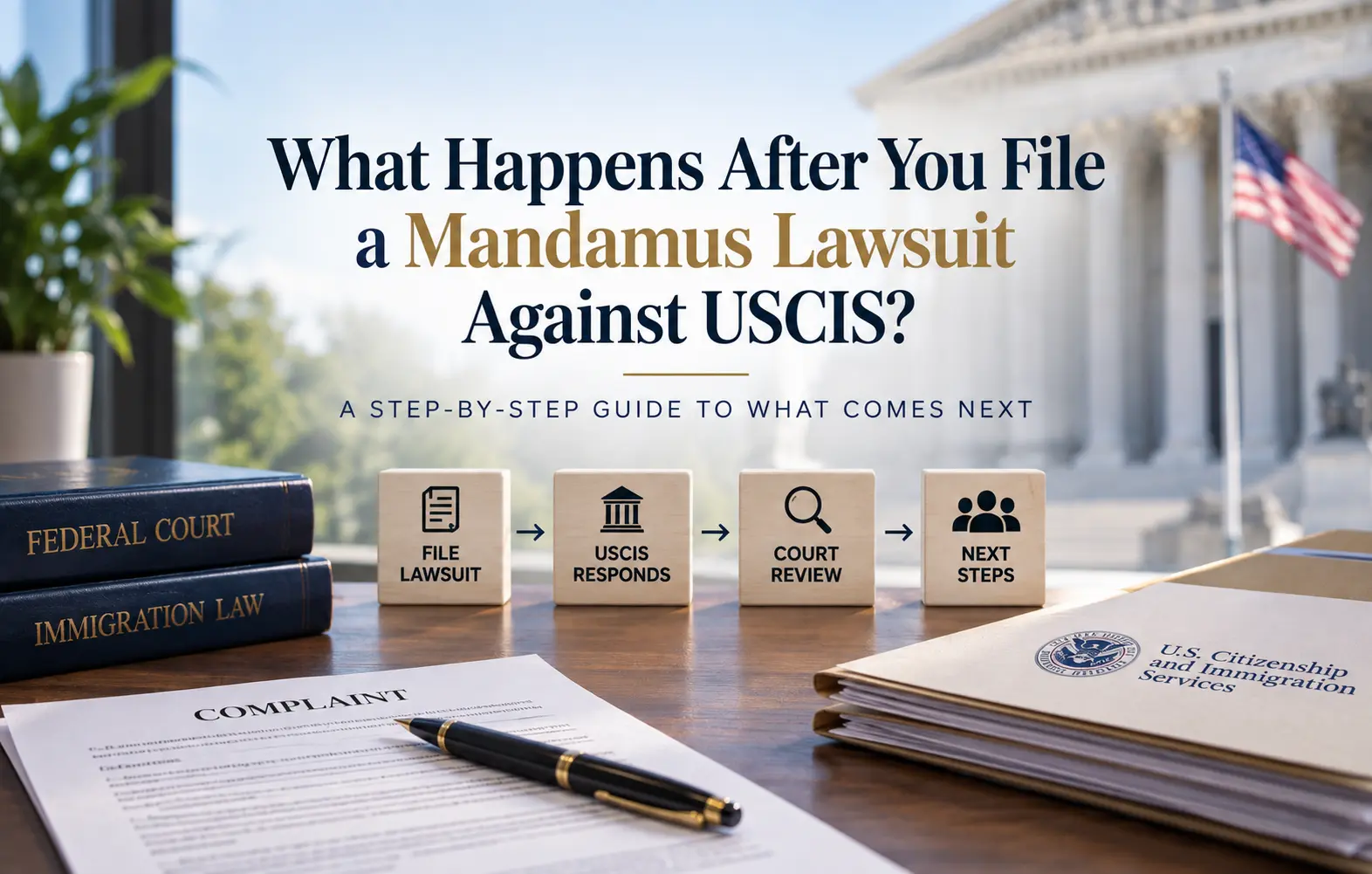
What happens after you file a mandamus lawsuit against USCIS? Filing the complaint is the beginning of the federal litigation process, not the end. After the lawsuit is filed and properly served, the government has an opportunity to respond. USCIS may take action on the underlying immigration case while the lawsuit is pending, or the government may defend the delay and ask the court to dismiss the case.
What happens after a mandamus lawsuit is filed?
After the complaint is filed, the defendants must be properly served and the government receives an opportunity to respond. USCIS may review the underlying case and take action, which can include an interview, request for evidence, approval, denial, or another adjudicative step. If the government contests the lawsuit, the federal court may address motions, briefing, jurisdiction, venue, or the merits. A mandamus lawsuit does not guarantee approval or a specific timetable.
The Complaint Is Filed in Federal Court
A mandamus lawsuit begins with a federal complaint. The complaint identifies the plaintiff, the immigration matter that remains pending, the federal defendants, the legal basis for the court’s jurisdiction, the alleged delay, and the relief requested.
In an immigration-delay case, the requested relief generally focuses on agency action. The purpose is not to ask the judge to approve the underlying immigration benefit. Instead, the lawsuit asks the court to address an alleged failure to act within a legally reasonable time, subject to the requirements of the applicable causes of action and the law of the federal court.
Depending on the case, the complaint may assert claims under the Administrative Procedure Act, the Mandamus Act, or both. The precise claims and defendants should be determined after reviewing the immigration record and the jurisdiction in which the case will be filed.
The Defendants Are Served
Filing a complaint does not by itself complete service. The defendants must be served in accordance with the applicable federal rules and any court-specific requirements.
Actions involving federal agencies and federal officers have specific service requirements. Counsel should verify the appropriate recipients and method of service for the particular case rather than assuming that sending the complaint to one government office is sufficient.
Why service matters: Proper service starts the response process and avoids unnecessary procedural problems that can delay the federal case.
The timing for the government’s response is governed by the Federal Rules of Civil Procedure, the method of service or waiver, and any applicable court order. The exact schedule can therefore vary from case to case.
The Government Has an Opportunity to Respond
After service, the government may respond to the complaint in several ways. The response can address the alleged delay, the legal claims, jurisdiction, venue, the requested relief, or the underlying procedural history.
USCIS Takes Action
The agency may move the underlying immigration matter forward while the federal lawsuit is pending.
The Government Seeks Additional Time
Government counsel may request additional time to respond or provide information to the court.
The Government Contests the Lawsuit
The defendants may argue that the delay is not unreasonable, that the court lacks jurisdiction, or that the plaintiff has not stated a viable claim.
The Parties Discuss Resolution
Depending on the circumstances, the government may provide information about anticipated agency action or discuss whether the litigation can be resolved.
None of these possibilities should be presented as automatic. Federal litigation is case-specific, and the response can depend on the agency, the immigration benefit, the court, the procedural history, and the allegations in the complaint.
USCIS May Take Action on the Underlying Case
One of the most important things that can happen after filing is meaningful action by USCIS. A pending case may move forward while the federal lawsuit is active.
Depending on the immigration benefit and the case history, USCIS might:
- Schedule an interview.
- Issue a request for evidence.
- Complete an additional review step.
- Approve the underlying application or petition.
- Deny the application or petition.
- Take another adjudicative action appropriate to the case.
A mandamus lawsuit generally seeks action, not a particular substantive result. The filing of a lawsuit therefore does not change the underlying eligibility requirements or guarantee that USCIS will approve the case.
Important: A case that moves forward after litigation may still require an interview, an RFE response, additional documentation, or other steps before a final decision can be made.
What If the Government Contests the Lawsuit?
A mandamus lawsuit is not automatically won because a complaint has been filed. The government may defend the case and ask the court to dismiss the claims.
The Government May Challenge the Legal Claim
The defendants may argue that the plaintiff has not shown an unreasonable delay, that the agency is acting within a reasonable processing framework, or that the requested relief would improperly interfere with agency priorities.
Jurisdiction or Venue Issues
Federal courts have defined jurisdictional limits. The location of the plaintiff, defendants, agency activity, and underlying case can affect where a lawsuit may properly be filed and which court has authority to hear the claims.
The Court May Require Briefing
If the case is contested, the court may set deadlines for motions and responses. The litigation may therefore continue beyond the initial filing and government response.
The Case May Require Additional Time
A contested case can take longer than a case in which the agency takes prompt action. Additional attorney time and litigation costs may also result depending on the scope of the dispute and the court’s procedures.
For that reason, a client should understand the potential litigation path before filing, including the possibility that the government may defend the case rather than immediately resolve the delay.
What Happens If USCIS Approves or Otherwise Resolves the Case?
If USCIS takes the action requested by the lawsuit, the case may become moot because there may no longer be a live dispute concerning the delayed agency action. Counsel may then need to address the appropriate disposition of the federal case with the government and the court.
For example, if USCIS approves the pending immigration benefit, the plaintiff may no longer need an order compelling USCIS to adjudicate that benefit. The federal litigation may then be voluntarily dismissed, dismissed by stipulation, or resolved through another procedure permitted by the Federal Rules and the court.
Approval is not the only possible agency action. An interview, RFE, denial, or other adjudicative step may also change the posture of the litigation. Whether the lawsuit is moot or whether another issue remains depends on the relief requested and what has actually occurred.
What a Mandamus Lawsuit Does Not Guarantee
It is important to have realistic expectations before filing. A federal lawsuit can create judicial oversight of an alleged agency delay, but it does not guarantee a particular outcome.
- It does not guarantee approval of the immigration benefit.
- It does not guarantee that USCIS will act on a particular date.
- It does not eliminate substantive eligibility or admissibility requirements.
- It does not prevent the government from defending the lawsuit.
- It does not prevent USCIS from requesting evidence or taking another legally appropriate action.
The purpose of the litigation is generally to seek agency action where the delay may be legally unreasonable. What happens after filing depends on the agency, the government defendants, the court, and the individual case.
Frequently Asked Questions
Select a question to read the answer.
Does USCIS usually act after a mandamus lawsuit is filed?
USCIS may take action after litigation is filed, but there is no guarantee that it will do so immediately. The government’s response and the agency’s action depend on the individual case and circumstances.
Will the government automatically settle a mandamus case?
No. The government may take action, provide information, seek additional time, defend the lawsuit, or pursue another procedural response. There is no automatic settlement process for every mandamus case.
Can USCIS approve my case after I file mandamus?
Yes. USCIS can take action on the underlying case while the federal lawsuit is pending, including an approval if the applicant is otherwise eligible.
Can USCIS deny my case after I file mandamus?
Yes. A mandamus lawsuit generally seeks agency action, not approval. USCIS continues to apply the substantive eligibility requirements to the underlying case.
What if USCIS schedules my interview after I file?
An interview may be meaningful agency action, but it does not necessarily end every issue in the federal case. Counsel should evaluate what relief was requested and whether the agency has actually resolved the delay.
What happens if USCIS approves the case during the lawsuit?
If the agency has provided the action requested, the delay claim may become moot. The parties may then address dismissal or another appropriate resolution with the court.
Can the government fight a mandamus lawsuit?
Yes. The government may challenge the claim, raise jurisdictional or venue issues, argue that the delay is not unreasonable, or seek dismissal. A plaintiff should be prepared for that possibility before filing.
How long does a mandamus lawsuit take after filing?
There is no guaranteed timeline. Some cases move toward agency action relatively quickly, while contested cases can require motions, briefing, and additional court proceedings.
Understand the Process Before You File
Filing a mandamus lawsuit is not the final step. It starts a federal court process in which the government may respond, USCIS may act, and the court may become involved in resolving the dispute. Understanding those possibilities is an important part of deciding whether litigation is appropriate for a delayed immigration case.
This article provides general information, not legal advice. Federal procedure, jurisdiction, venue, and the legal standards applicable to unreasonable-delay claims can vary. Prior case outcomes do not guarantee similar results.